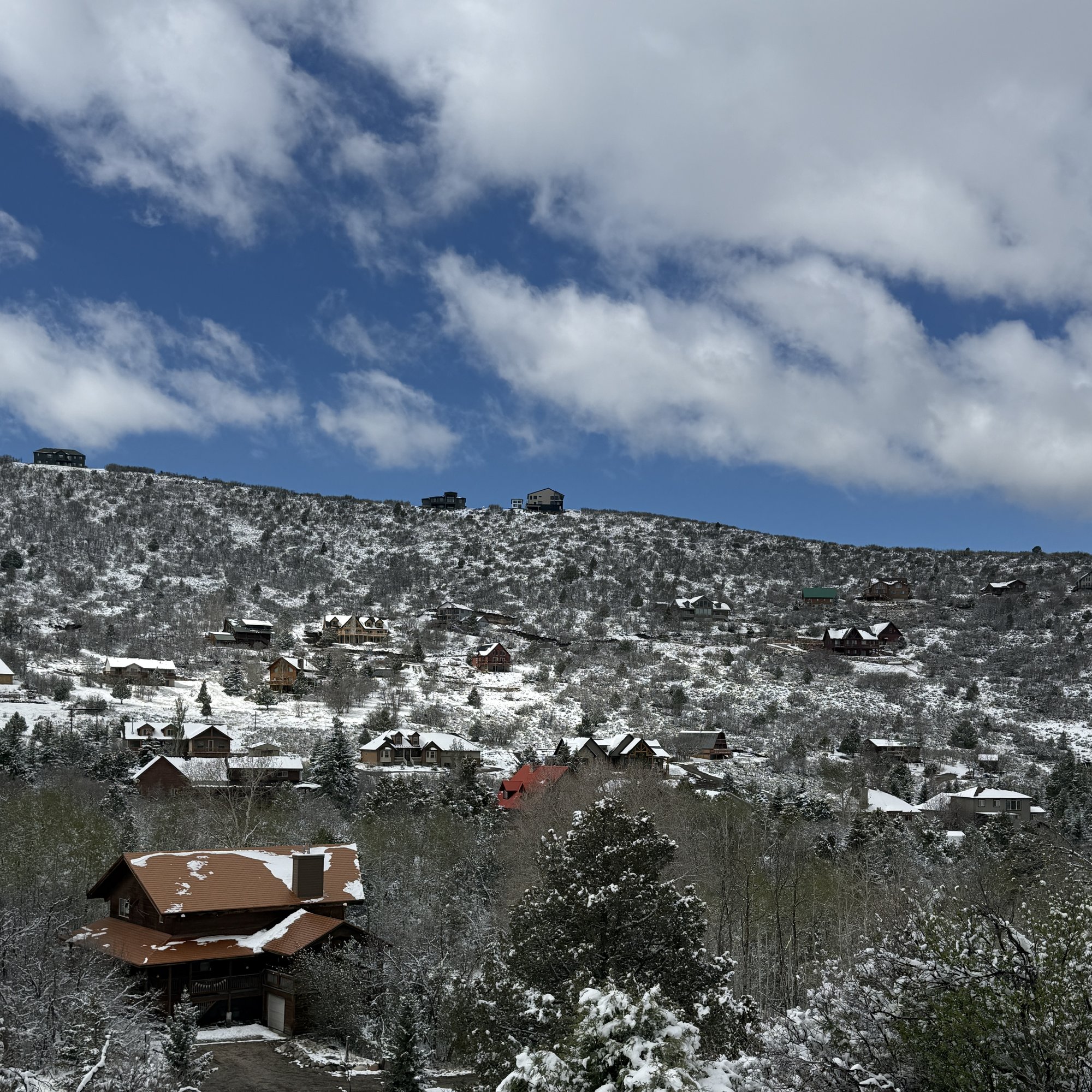
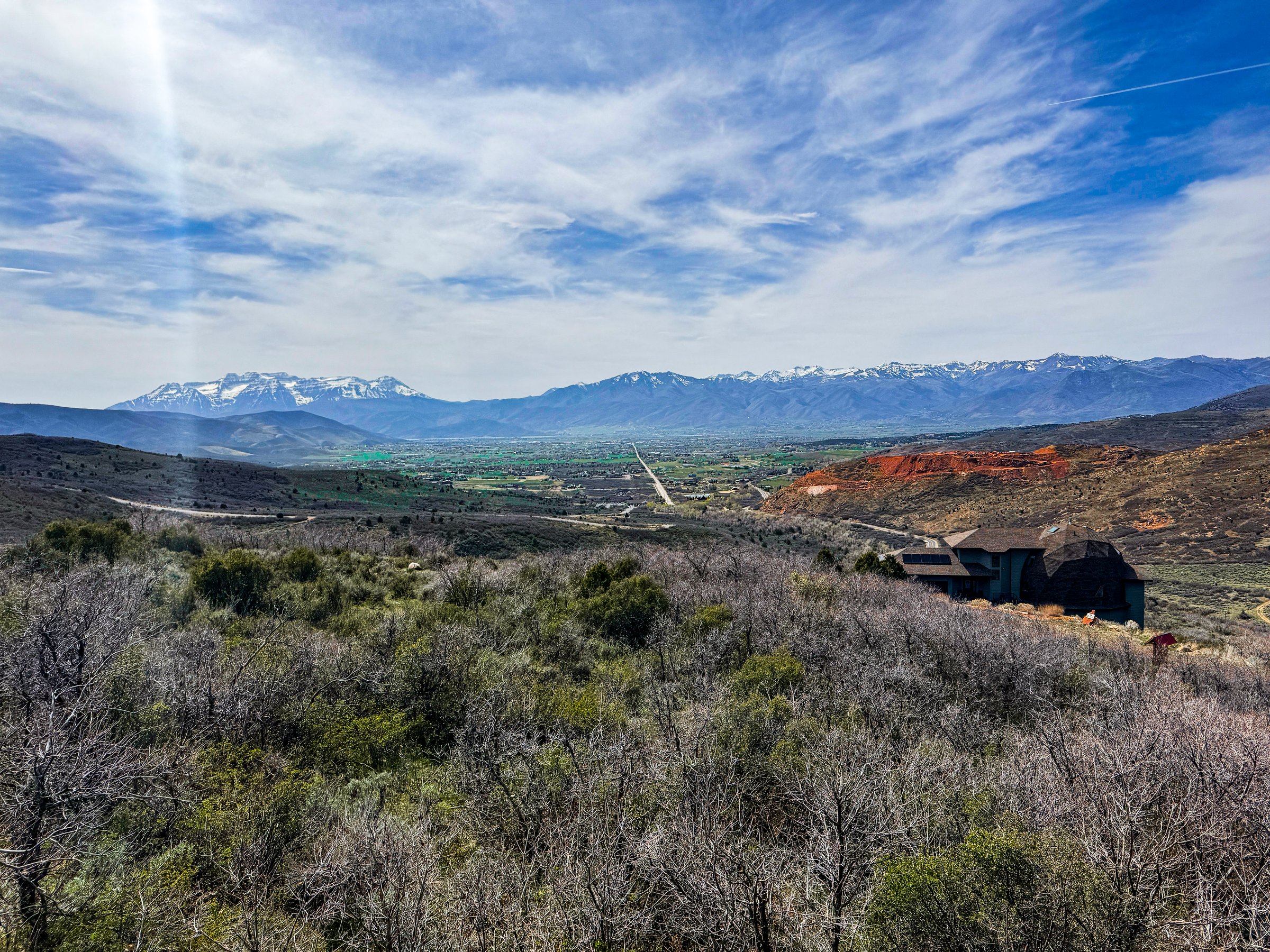
Timberlakes is the mountain-lot community east of Heber City — a mix of seasonal cabins, full-time residences, and vacant buildable lots tucked along the Uinta fringe. It's the most common "but is it actually livable year-round?" question I get from buyers, and the honest answer depends entirely on the specific property.
Source: Wasatch-side MLS, trailing 24 months (Apr 2024 – Apr 2026). 73 closed sales in the Timberlakes subdivision. 27 active listings. Median days on market: 41. Average sold-to-original-list ratio: 91.35%. Closed sales volume: $63.8M.
Timberlakes is not a master-planned resort development. It's a decades-old mountain subdivision that started as weekend cabin lots and has slowly grown a full-time resident population as heating, roads, and remote work have caught up.
Lots are forested. Trees are mature. Wildlife is constant — deer, moose, and the occasional elk crossing. Streets are quiet, neighbors are spaced, and the sound floor is noticeably lower than the valley floor below.
Winter is the real filter. Elevation matters. Snowfall above the valley is meaningfully higher, and the drive up Center Creek Road changes character in December. Some residents treat the community as a year-round home; others close it up in November and come back in May. Both are normal in Timberlakes.
Three distinct product types move at different speeds and appeal to different buyers. Treating them as one market is how offers get mispriced.
Older wood-frame cabins, often 1,200–2,000 sq ft, originally built as weekend retreats. Charm is high; systems vary enormously. Expect to budget for well, septic, roof, and insulation scope.
Newer or renovated builds engineered for year-round occupancy. Insulation packages, heated garages, upgraded septic and snow-shed roof design. Command a real premium over seasonal stock.
Lots still come up periodically in the community. Access, utilities, slope, and CC&R restrictions vary by plat. Due diligence on buildability before an offer is essential.
Older cabins on desirable lots where the land carries most of the value. Scope ranges from substantial renovation to complete rebuild within the CC&R envelope.
Timberlakes operates differently than a valley subdivision. Four infrastructure questions should be answered in writing before you write an offer.
On every Timberlakes transaction I handle, I pull the CC&Rs, a septic report, a well-flow test, and the road-tier designation before we go under contract. That's the due diligence floor up here.
Official community site: timberlakesutah.com — HOA governing documents, road tier maps, and community announcements.
Timberlakes is within the Wasatch County School District. Most full-time families are assigned to Heber City schools, with bus routing that accounts for seasonal road conditions up Center Creek.
Timberlakes is a mountain-lot community east of Heber City in Wasatch County, Utah, reached via Center Creek Road and then up into the Uinta National Forest fringe. The entrance sits roughly 10 to 15 minutes from downtown Heber, but travel time varies significantly by season and by how far up the development a specific lot is.
Some are, some aren't. Timberlakes contains a mix of seasonal cabins and full-time residences. Year-round habitability depends on road maintenance tier, how the structure was insulated and plumbed, well and septic design, and whether the property has reliable winter access. Many older cabins were never engineered for full-time occupancy. Verify utilities, insulation, and winter road service before assuming year-round use.
As of 2026, smaller seasonal cabins generally trade from the mid $400Ks to about $700K. Full-time homes and larger builds range from the high $700Ks into the $1.5M+ range for newer construction on premium lots. Vacant buildable lots come up periodically in the $100K to $300K range depending on access and restrictions.
Timberlakes is primarily a residential and recreational community, not a short-term-rental resort. HOA rules and county ordinances both apply and have been updated periodically. Before assuming nightly-rental income, verify the current CC&Rs, any minimum-stay rules, and Wasatch County short-term-rental regulations for the specific parcel.
Three things. Road access and plowing vary by road tier within the development. Well and septic service on older cabins can need meaningful capital investment. The elevation and winter weather are genuinely different from the valley floor — snow loads are higher and shoulder seasons are shorter. A thorough inspection and a clear read of the CC&Rs prevent most of these surprises.
It can be an excellent second-home community if you're buying for the forest-lot experience rather than for rental income. The community has genuine character, wildlife, and privacy. Just underwrite the property on its own fundamentals — structure, utilities, road access — not on nightly-rental assumptions that may not be permitted.
The right cabin and the wrong cabin can look identical from the listing photos. Before you fall in love with one, let's check the road tier, the septic record, and the CC&Rs together.
Call or Text Ashley Send a Message