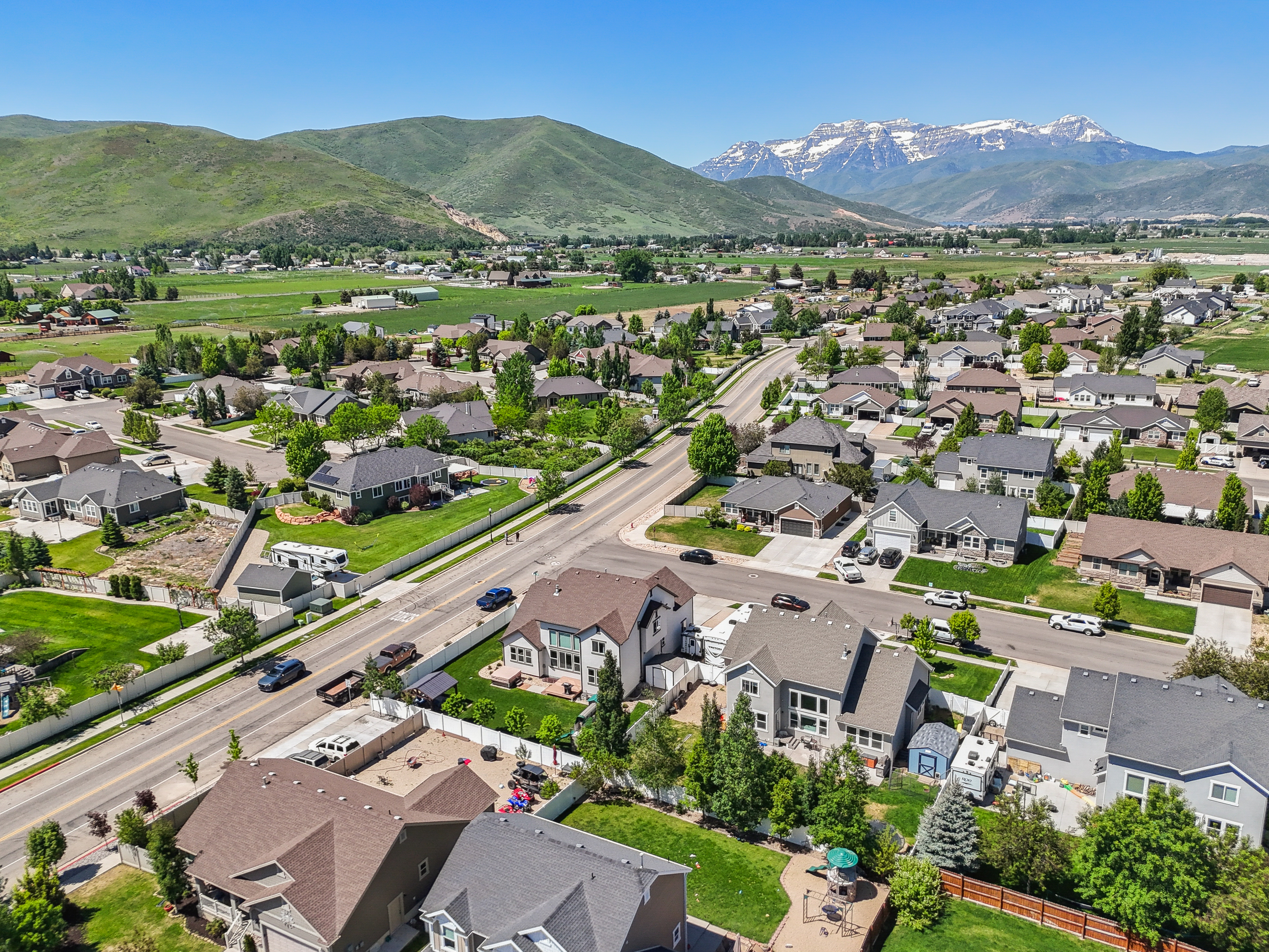
Heber City is the valley's commercial and civic hub — the place everyone else in the Wasatch Back drives to for groceries, schools, and the bank. It's also the most affordable entry point to the valley and the one most newcomers end up in. This is a practical guide to the neighborhoods, prices, schools, and growth story that's shaping 2026 Heber City real estate.
Heber City is where the valley's daily life happens. The grocery stores (Smith's, Lee's, Macey's), the Home Depot, the bank, the DMV, the hospital, the high school — all are in Heber City. If you live in Midway or Red Ledges, you drive to Heber for errands.
The character is small-Western-town with an unmistakable acceleration: population has roughly doubled in 20 years, and new subdivisions are opening on the edges every year. The Jordanelle development to the north and the Mayflower expansion beyond it are pulling Heber's identity slowly east-and-up toward Park City. Expect more growth, more traffic on Main Street, and more out-of-state license plates in the grocery parking lot.
For most buyers, Heber City is the right trade-off: lower prices than Midway or Park City, better day-to-day convenience than either, and a real community with families, local businesses, and longtime residents who've been here generations.
Heber City's zip code covers more than just the historic grid. Here are the sub-markets that actually behave differently in the MLS.
The grid streets surrounding Main Street, south of Center Street. Walkable to restaurants and the Tabiona and Heber Valley Railroad. Historic homes, tree-lined streets, real small-town character. Smaller lots, older bones, lots of charm.
Master-planned neighborhood on the east side of Heber City near the Wasatch County Rec Center. Newer construction with sidewalks, parks, and a walkable neighborhood layout. Popular with full-time residents looking for convenience and newer homes.
North-side subdivisions with larger lots than the older core. Newer builds, mountain and valley views from upper streets, convenient access to the US-40 corridor toward Park City.
Newer master-planned communities with strong views and modern builder homes. Attractive to relocation buyers who want current construction and a neighborhood amenity feel.
Technically an unincorporated area that borders Heber City. Larger parcels, more acreage, agricultural vibes, proximity to Deer Creek Reservoir. For buyers who want rural feel without a long commute.
Higher-elevation mountain subdivisions east and south of town. Cabin-style homes, heavy trees, serious snow, seasonal road conditions. For buyers who want a mountain retreat feel and don't mind the winter drive.
Two forces shape the 2026 Heber City real estate market more than any other.
Jordanelle and Mayflower development. The Mayflower Mountain Resort (now the Deer Valley East Village) is opening phase by phase through 2027 and beyond. This expands ski-in/ski-out inventory immediately adjacent to Heber Valley and raises the price floor for surrounding areas. Homes on the Heber side of Jordanelle Reservoir are increasingly bought by people working at or visiting the new resort. See the full submarket-by-submarket Mayflower impact analysis ›
Remote-work and relocation migration. California, Texas, and Florida have sent the largest waves of buyers into the valley over the last five years. Heber City has absorbed more of this migration than Midway simply because the inventory and price points allow it. The buyer pool is wealthier and more demanding than it was a decade ago, which has supported steady appreciation across price tiers.
Infrastructure is following: the US-40 corridor is being expanded, Heber Valley Hospital has had recent investment, and the city is planning a Main Street revitalization. Expect the character to shift gradually — denser, busier, more resort-adjacent — over the next decade.
Heber City is the educational center of the valley. All of Wasatch County's high-school students attend Wasatch High here.
Wasatch County School District performs in the top third of Utah public districts on graduation rates and standardized testing. Classrooms are generally smaller than suburban Salt Lake County districts, which families moving from larger metros often cite as a draw.
Heber City is the commercial and civic hub of Heber Valley, with roughly 19,000 residents. It has the grocery stores, restaurants, schools, and services the rest of the valley drives to. Day-to-day life feels like a small Western town that's growing fast — new subdivisions on the edges, expanded highway infrastructure, and a rising number of out-of-state transplants. Park City is 25 to 30 minutes away; Salt Lake is 45 to 50.
As of 2026, Heber City single-family median pricing is roughly $900K, with entry-level options in older neighborhoods starting around $600K and newer luxury builds reaching $3M+. Townhomes and condos range from about $450K to $900K. Price depends heavily on neighborhood, age of construction, and proximity to the Jordanelle and Deer Valley East Village developments.
The answer depends on what you value. Old Town has historic charm and walkability to Main Street. Wheeler Ranch is a master-planned neighborhood with sidewalks, parks, and newer construction. The North Fields and Mill Road areas offer larger lots and open space. Canyon View and Bridges at Valor Point are newer subdivisions with mountain views. Every neighborhood has trade-offs — a local agent tour is the fastest way to see the differences.
Heber City is the fastest-growing municipality in Wasatch County. Population has roughly doubled in the last 20 years and is projected to continue growing through the 2030s, driven by Jordanelle, Mayflower, and regional remote-work migration. Traffic on Main Street is noticeably heavier than it was even five years ago. The city is expanding infrastructure, but drivers should expect gradual densification, not a frozen-in-time small town.
Heber City restricts short-term rentals more tightly than Midway or unincorporated Wasatch County. Most residential zones do not permit nightly rental. Some limited zones and HOA-governed properties allow them with a city license. If rental income is part of your plan, verify the specific parcel with the city before buying — don't assume based on the listing description.
Heber if you want daily convenience, a more affordable entry point, and a real community feel with longtime residents. Midway if you want a quieter, more resort-oriented small town with Swiss-village character. Most of my clients visit both before deciding. Read the full comparison.
Let's talk through which neighborhoods fit your situation — schools, budget, commute, and whether you want to live in a town that's growing or one that's settled.
Call or Text Ashley Send a Message